
A Rice University-led research team is developing a new membrane-based process to recover copper from mining process waters, a step that could make metal extraction more efficient while improving water treatment and reuse at mines.
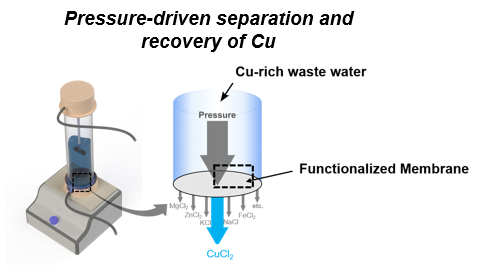
The project focuses on ion-selective nanofiltration, a pressure-driven separation process that uses specially designed membranes to pull copper ions out of complex water streams. Researchers say the effort advances membrane technology for the recovery of specific ions from complex waste streams and is intended to produce a continuous-flow, economically viable approach to copper recovery.
At the heart of the work is the design of ion-selective membranes and coatings that favor copper over other dissolved metal ions. These membranes are produced by functionalizing the surface of a membrane with a metal chelating ligand that binds specifically to Cu. The strong ion-specific selectivity of the ligands is translated to permselective transport of Cu through the membrane, while other smaller and larger ions are impeded or blocked from passing through the membrane. The researchers plan to extend these findings towards the design of other membranes selective to a variety of critical materials, such as Ga, Cd, and rare earth elements.
If successful, the technology could help copper recovery reach “pipe parity” with conventional treatment or reuse approaches for mining process waters at copper mines and refineries, while also improving environmental sustainability.
Check out the project research brief for more information.